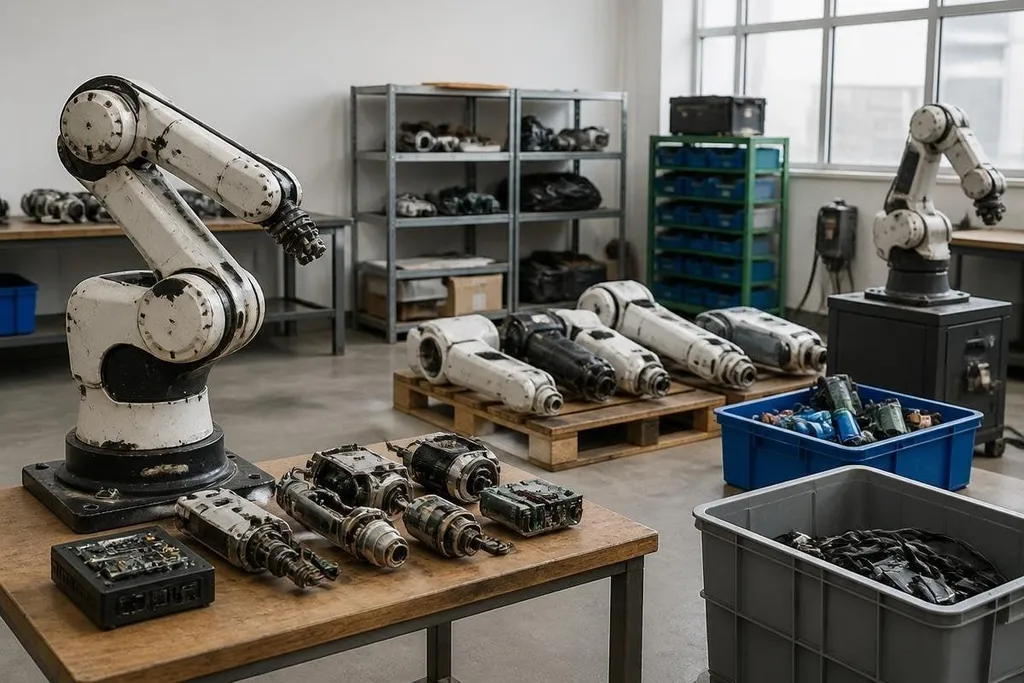
When a robot stops working, the next step is a decision about its parts, software, data, and battery. Some machines return to service after repair, while others become sources of spare parts or electronic waste.
Quick read
- Repair can cost less than replacement when the frame, motors, and control system still work
- Data must be removed before a robot leaves a factory or lab
- Batteries, circuit boards, and sensors need separate handling in many recycling systems
Repair comes before recycling
A robot may reach the end of its planned service period while many parts still work. A company may replace an old controller, motor, sensor, or gripper and keep the same frame in service.
That choice depends on parts supply, software support, safety checks, and repair cost. If the maker still sells replacement parts and supports the control software, repair has a clear path. If a controller cannot run with newer software, the repair may stop there.
Refurbishment is another option. A used robot can be cleaned, inspected, fitted with replacement parts, and tested before it moves to another site. This suits machines with a sound frame and a known service history. Machines with damaged wiring or repeated safety faults need a more careful review.
Some robots become parts donors
A machine that cannot return to work can still supply useful parts. Motors, gearboxes, cameras, encoders, grippers, power supplies, and structural pieces may support repairs on other robots of the same model.
This approach needs records. A part removed from a retired robot should carry its model, serial number, service history, and known fault. Without that information, a part may look usable while hiding damage from heat, shock, moisture, or heavy loads.
The control computer needs special care. It may hold maps, camera footage, task logs, network settings, or access details for other equipment. Removing a robot from a site without clearing that data leaves a security problem behind.
Batteries and electronics need separate handling
A robot’s battery often needs a different route from its steel or aluminum frame. Lithium-ion packs can store energy after the robot stops running, so staff should follow the battery maker’s handling instructions and local waste rules.
Circuit boards contain materials that recycling plants can recover, but they also include substances that need controlled treatment. Motors and metal frames are easier to sort than mixed electronic assemblies.
A dismantling plan should identify each material before anyone starts cutting cables or opening sealed packs.
Local rules decide who can collect, transport, and process these parts. Requirements differ by country and by battery type, so a factory should check with its waste contractor before moving a damaged pack.
A robot may leave service while its software still runs elsewhere. Robot24.com robotics coverage can trace that split in factory controls and lab systems, where code may outlast the hardware it first ran on.
The software may outlive the hardware
Retiring the physical robot does not retire its software automatically. A company may keep simulation files, calibration data, task programs, maintenance records, and operator training material for the next machine.
That archive can help with a replacement, but it should be separated from live network access. Remove old passwords, certificates, remote access tools, and wireless settings. Delete personal or site-sensitive data according to the company’s retention rules.
The robot also needs a clear status after removal. Mark it as retired, for parts, awaiting repair, or ready for disposal. That label prevents an old machine from returning to a work area without a safety review.
A practical retirement check
Use this list before a robot leaves your site:
- Record the model, serial number, hours, repairs, and known faults.
- Save programs and service records that the replacement may need.
- Remove user data, network credentials, maps, and remote access settings.
- Isolate the battery and follow its maker’s storage and transport instructions.
- Separate reusable parts from damaged electronics and metal.
- Get a written handoff from the repair shop or waste contractor.
I'd keep a robot in service when its safety systems, parts supply, and software support still make repair sensible. A low purchase price for a replacement does not show the full cost of training, integration, data removal, and disposal.
The next useful step is a retirement rule written before the robot fails: list who checks it, where its data goes, how its battery moves, and which parts can return to work.